St. Joseph Hospital · Bethpage
Emergency Medicine · St. Joseph
PGY-1 20 wk · PGY-2 24 wk · PGY-3 20 wk
The program’s home and where most of your EM training happens. A 203-bed community hospital with 35,000 ED visits a year, certified as a Chest Pain Center and Primary Stroke Center, with an on-site cath lab. You learn to carry high volume without losing quality, alongside faculty who mentor you in both clinical practice and systems-based practice.
St. Catherine of Siena · Smithtown
Emergency Medicine · St. Catherine
4 wk each year
A second community ED with a different patient population: 24,000 visits a year across 35 beds and a 31.4% admission rate. Also a Chest Pain and Primary Stroke Center with an on-site cath lab. Working a second system teaches you to adapt to different resources, consultants, and patients.
SJH operating rooms · GSUH ultrasound
Anesthesia & Ultrasound
PGY-1 · 4 wk
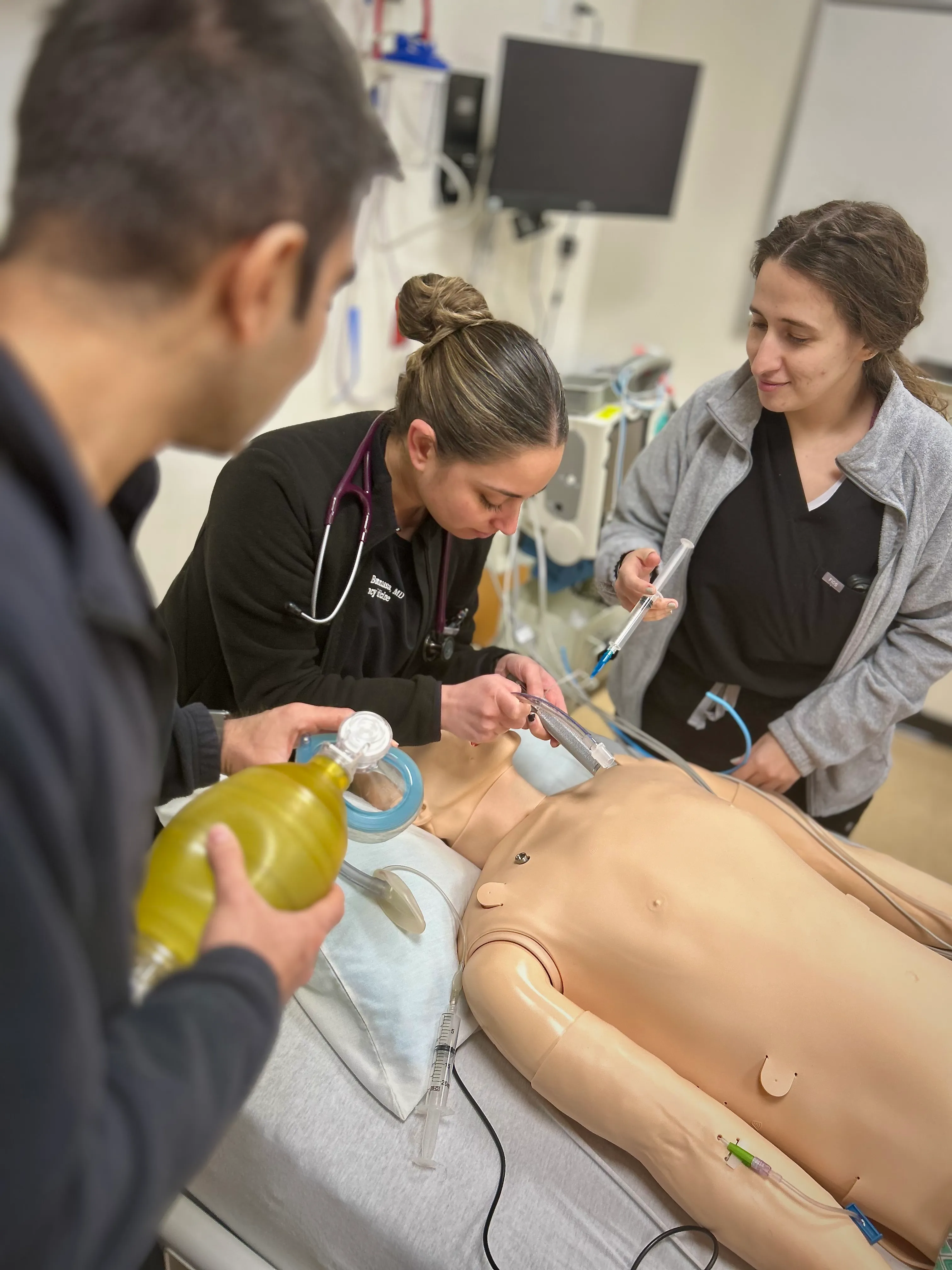
Mornings in the St. Joseph ORs with anesthesia attendings and CRNAs, focused on airway: video and direct laryngoscopy in a controlled setting. Afternoons at Good Samaritan doing point-of-care ultrasound with fellowship-trained attendings and ultrasound fellows.
SJH 28-bed ICU · St. Catherine 23-bed ICU
Critical Care
Three blocks · PGY-1 St. Catherine 4 wk · PGY-2 SJH 4 wk + St. Catherine 4 wk
Three ICU blocks across PGY-1 and PGY-2; there is no ICU rotation in PGY-3. Both ICUs are combined units covering CCU, MICU, SICU, and neuro ICU patients. You work as a full member of the ICU team on ventilator management, hemodynamic monitoring, pressor titration, and central lines, and on the longitudinal decisions that follow: weaning, renal replacement, goals of care, and disposition.
Good Samaritan University Hospital
Pediatric Emergency Medicine
PGY-1 8 wk · PGY-2 4 wk · PGY-3 4 wk
A dedicated pediatric ED at a Level II Pediatric Trauma Center with a PEM fellowship and 22,000 pediatric visits a year. You work with fellowship-trained PEM attendings and fellows on pediatric resuscitation, airway, sedation, and talking with families under stress, from neonates to adolescents.
Good Samaritan · 8-bed PICU
Pediatric ICU
PGY-2 · 4 wk
Critically ill children with medical and surgical conditions: respiratory failure, septic shock, trauma, DKA, status epilepticus. You place pediatric central and arterial lines, intubate, and perform LPs, and learn pediatric ventilator management, pharmacology, and fluid resuscitation with pediatric intensivists.
Good Samaritan · Level I Trauma Center
Trauma
PGY-2 · PGY-3 · 4 wk each
Two blocks on the trauma service at the region’s Level I center. You respond to every trauma activation, do trauma consults, and round daily with the service, seeing penetrating, blunt multi-system, TBI, and complex orthopedic injuries. Chest tubes, fracture reductions, and damage-control resuscitation alongside trauma surgeons.
St. Charles Hospital · Labor & Delivery
Obstetrics
PGY-1 · 2 wk
A high-volume labor and delivery unit with both high-risk and uncomplicated deliveries. You manage active labor, deliver babies, and learn to recognize postpartum hemorrhage, eclampsia, shoulder dystocia, and cord prolapse, so an unexpected delivery in the ED is not your first.
NYC Poison Control Center
Toxicology
PGY-1 · 4 wk
You take phone consults from hospitals across New York State under board-certified toxicologists and toxicology fellows. The block includes attending- and fellow-led lectures and a weekly toxicology journal club, covering the unknown ingestion, antidotes, enhanced elimination, envenomations, and emerging drugs.
Fire Department of New York
EMS
PGY-2 · 2 wk
Starts at FDNY Headquarters with EMS leadership and medical directors. You ride along with BLS crews, ALS crews, and FDNY lieutenants, then spend a day at the city’s 911 dispatch center (PSAC II) listening to medical calls from all five boroughs.
St. Joseph Hospital · Observation
Clinical Decision Unit
PGY-3 · 4 wk
Observation medicine for patients who need more than an ED visit but not an admission: chest pain rule-outs, asthma, anaphylaxis rebound, CHF diuresis, syncope, dehydration, and IV antibiotics. The focus is risk stratification, observation protocols, and deciding who can safely go home.
Affiliated, academic, or approved outside sites
Electives
PGY-2 · PGY-3 · 4 wk each
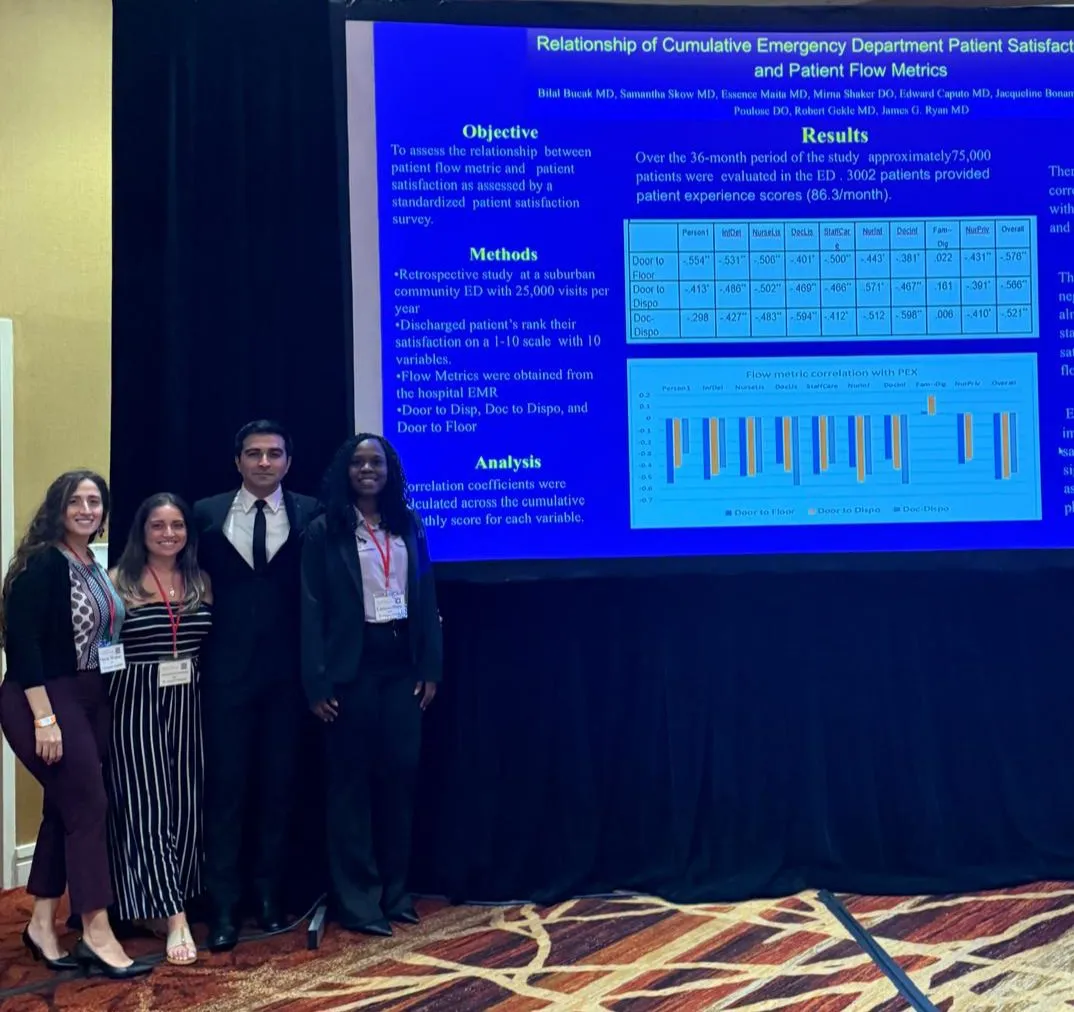
Time to build toward what you want after residency. Leadership works with you on the choice; residents have done ultrasound, EMS, toxicology, PEM, trauma surgery, administration, research, and international global health. Some use the time for research, QI, or education projects.